Generative Engine Optimization: The 2026 Practitioner's Playbook
Move beyond the 10 blue links. Learn how to optimize for RAG frameworks, information gain, and semantic density to earn citations in AI-generated search results.
Agencies lead with the same checklist they've run on every account since 2015. For a local business watching its margins, the gap between what you're paying for and what will actually move you up the results should matter more than it does.
~2015
When most local SEO agency playbooks were last meaningfully updated
10 min
To run a real competitor gap analysis yourself — no tools required
Top 3
What a serious local SEO plan targets — not “improvement” or “visibility”
Most local businesses paying for SEO are paying for a process that hasn’t changed in a decade.
The audit. The citation cleanup. The Google Business Profile optimization. The review-getting strategy. All of it gets presented as a comprehensive approach, and most of it stopped being a competitive differentiator years ago.
The agencies still selling it aren’t bad at their jobs.
The template works well enough that clients don’t know what they’re missing. And clients not knowing what they’re missing is a comfortable place for a services business to be in.
What actually separates businesses ranking in the top three local results from those sitting on page two is usually visible in about ten minutes — if you look at the right thing.
Pull up Google. Search the terms you want to rank for with your city and service together. Then actually read the top results.
Look at:
That’s your gap analysis. Specific to your market and your actual competitors.
Most agencies aren’t doing that work per client. They have a system and they run the system. Running the system scales. Whether the system is right for your specific situation is a different question.
For a business with a tight margin, this matters in a way it doesn’t for someone who can absorb 12 months of slow results.
If you’re paying for SEO every month, that money should go toward closing the gap between your current position and the top three in your specific area. Not toward a checklist a junior analyst runs the same way on every account.
There’s a timing problem with the old approach.
Local search results are more competitive than they were three years ago. The businesses that have been doing GBP optimization and citation building since 2018 have already done it.
Running the same process now gets you to where they were in 2021 — not ahead of where they are today.
COMPETITOR HEAD START · typical local market
The gap is usually somewhere other than the obvious places.
Review quality matters more than review count in most competitive local markets. Reviews that name the service, mention the location, and describe the outcome outperform a hundred generic five-stars.
Content specificity beats volume. Pages that answer the specific questions people in your area actually search for outperform generic service page copy — and most local sites are still using the generic version.
Mobile load speed is still poor on most local sites, and it has affected rankings for years. It’s a gap that’s relatively cheap to close and rarely gets done.
Think with Google · IPSOS MediaCT · 2014 ↗
76% of people who search for something nearby on mobile visit a related business within 24 hours.
The map pack captures roughly 44% of all clicks on a local results page. If you’re not in those top 3 positions, most of that intent passes you by entirely.
If you’re reviewing what you’re spending on local SEO, there’s one useful question to put to anyone you’re considering:
What are the top-ranking businesses in my specific market doing that I’m not, and how are you planning to close that gap?
If the answer describes a process rather than your actual competitors, that’s probably what you’re getting for your money.
DO THIS NOW
Search your own target keywords right now and actually read the pages that rank above you. You’ll probably see the problem faster than any audit report will show you.
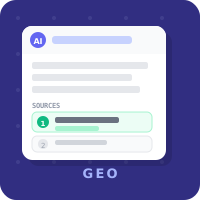
Move beyond the 10 blue links. Learn how to optimize for RAG frameworks, information gain, and semantic density to earn citations in AI-generated search results.
Move beyond basic keyword research. Learn how to manage faceted navigation, scale programmatic landing pages, and optimize for AI-driven search snapshots.

69% of searches end without a click. We analyze how to monetize brand mentions within AI Overviews and force attribution from the "black box" engines.
